Daily newsletter · Sat 26 Sep 2026
American households now expect prices to rise 4.6% over the next year
The University of Michigan's consumer sentiment index finished September at 48.1, down from 51.7 in August. That is a four-month low, and 15% below where it stood in January. The final reading was a touch better than the preliminary 47.8.
The Fed cares more about the inflation number. Households expect prices to rise 4.6% over the next year, up from 4.0% a month earlier and the highest since June. Their five-year expectation went to 3.4%, after three months at 3.3%.
Fuel is doing most of the damage. Joanne Hsu, who runs the survey, said the short-run outlook for business conditions plunged on worries about fuel prices and fresh trade disputes. Views on personal finances, both now and a year out, fell about 10%.
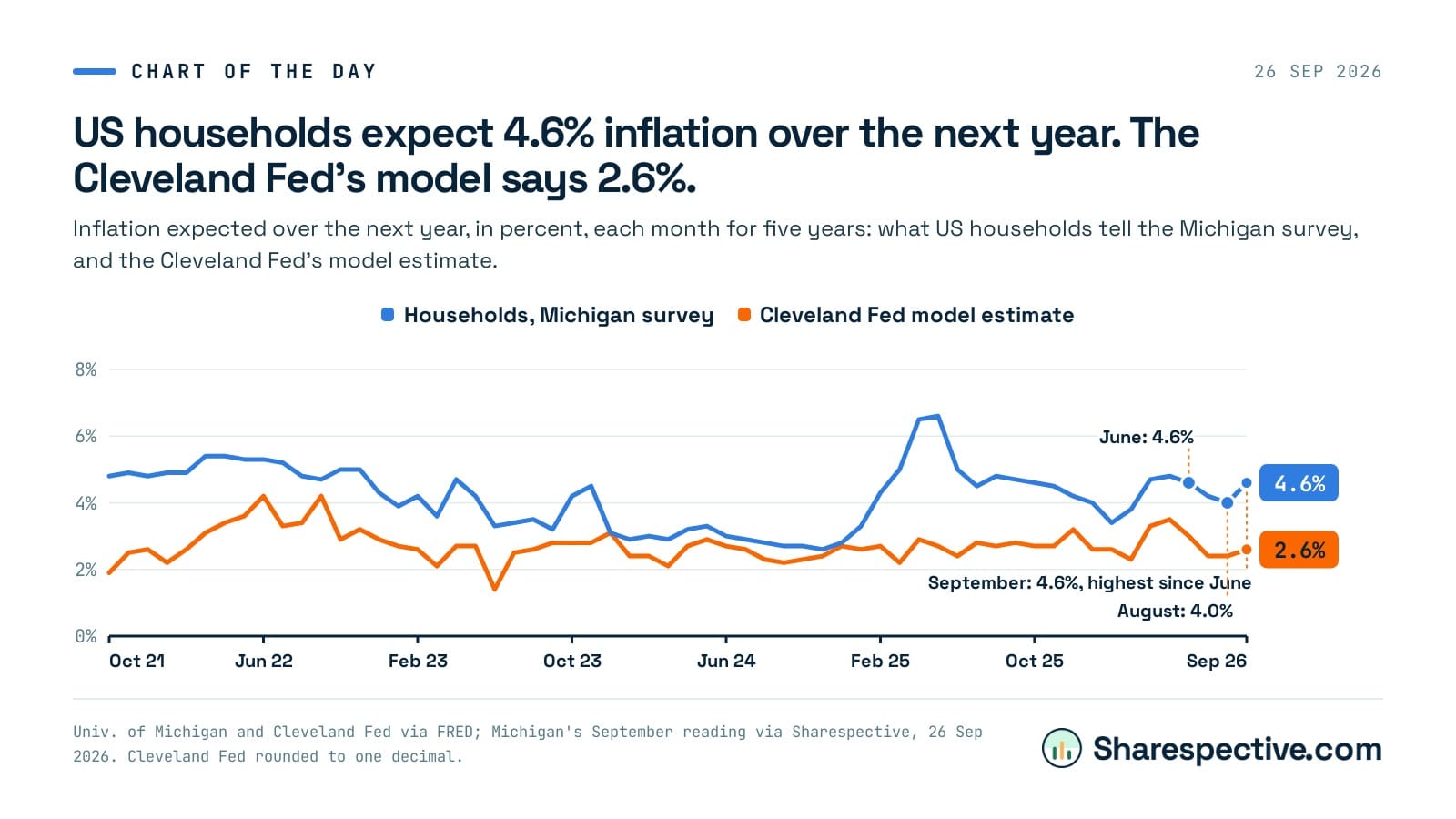
That feeds straight into rates. The Federal Reserve lifted its target range to 3.75–4.00% last week, and the 10-year Treasury yield touched 5.225% on Friday, its highest since 2007.
People who expect higher prices tend to ask for higher pay, and businesses that expect higher costs raise prices early. Central banks watch this survey for exactly that reason.
the mood index has been a poor guide to what Americans actually spend for years. The inflation expectation is harder to wave away, and a second month above 4.5% would make it much harder for the Fed to stop raising rates.
More in
All stories →- Wednesday 11 November October's inflation report put a half-point rate rise back on the table
- Saturday 7 November America added 165,000 jobs in October, and the bond market heard a December rate rise
- Wednesday 4 November The Reserve Bank of Australia raised rates to a level Australians have not seen since 2008
General information and commentary only, not financial advice. It does not take account of your objectives, financial situation or needs, and reflects the author's own reading of public information at the time of writing, which may be wrong. Sharespective, its people and its clients may hold positions in the companies covered. Do your own research and talk to a licensed adviser.