Daily newsletter · Mon 26 Oct 2026
New Zealand's Reserve Bank is expected to lift rates to 3% on Wednesday, ten days before the election
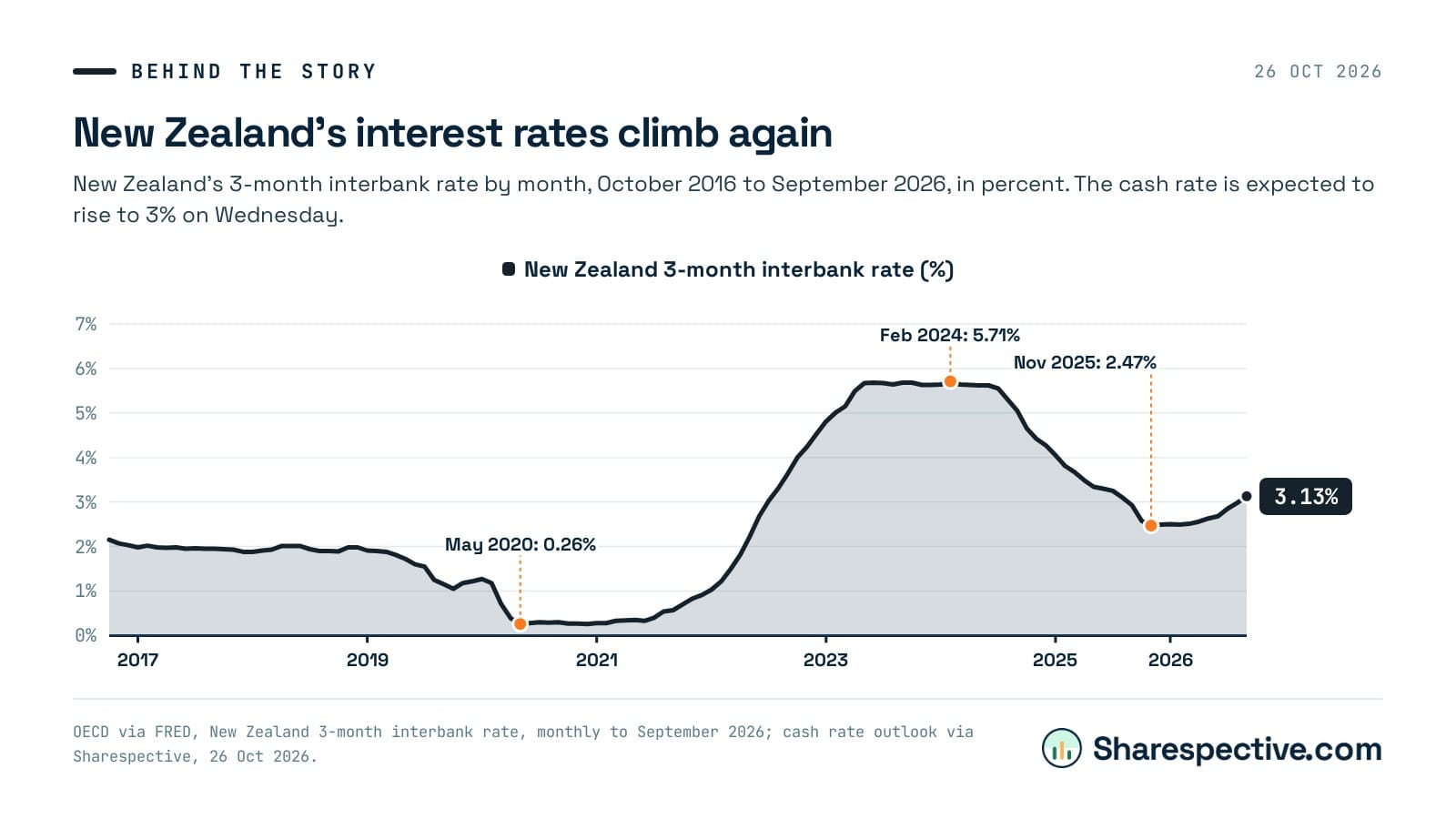
The Reserve Bank of New Zealand decides at 2pm on Wednesday in Wellington, noon in Sydney. It is expected to lift the official cash rate a quarter-point to 3%, its third rise in a row.
Three weeks ago this looked like a coin toss. In early October, markets put the chance of a rise at about 58%. ASB's Mark Smith now reckons it is about 90% priced in, and BNZ, ANZ, ASB, Kiwibank and Westpac all expect it.
Inflation is the reason. Prices rose 3.7% in the year to September, above the 1% to 3% target. ASB expects annual inflation of 4.7% by the December quarter, as fuel and a weaker kiwi push up import costs.
Australia gets its own test the same day, when September-quarter inflation figures land at 11.30am in Sydney, 1.30pm in Auckland. The RBA's cash rate is already 4.60%, and inflation reached 4.0% in August.
Its deputy governor, Andrew Hauser, warned last week that the outlook is much worse than the bank had forecast. Market odds of a rise to 4.85% on 3 November, Melbourne Cup Day, jumped from about 20% to around half.
Westpac's Kelly Eckhold expects the cash rate to reach 4% by September 2027, and says a split vote on Wednesday seems very possible. For anyone refixing a mortgage, that path matters more than this week's quarter-point.
More in
All stories →- Wednesday 11 November October's inflation report put a half-point rate rise back on the table
- Saturday 7 November America added 165,000 jobs in October, and the bond market heard a December rate rise
- Wednesday 4 November The Reserve Bank of Australia raised rates to a level Australians have not seen since 2008
General information and commentary only, not financial advice. It does not take account of your objectives, financial situation or needs, and reflects the author's own reading of public information at the time of writing, which may be wrong. Sharespective, its people and its clients may hold positions in the companies covered. Do your own research and talk to a licensed adviser.