Daily newsletter · Wed 7 Oct 2026
Google signed up for nuclear power that doesn't exist yet, and Constellation Energy rose 12.25%
Constellation Energy, America's largest nuclear power operator, rose 12.25% to US$300.40 on Tuesday. It signed a 20-year deal to sell Google 890 megawatts of new nuclear capacity, all of it squeezed out of reactors it already runs.
So what is an uprate? It is an upgrade that lets an existing reactor make more electricity, using new turbines, steam generators and control systems. Constellation will do it at 11 units on six sites in Illinois, Pennsylvania and New Jersey, and will spend US$4.3 billion on the work.
The first uprate is due online in 2028. A second agreement covers 2,700 megawatts of existing supply for 15 years, taking the two deals to about 3.6 gigawatts. All of it feeds PJM, the eastern grid that serves 67 million people.
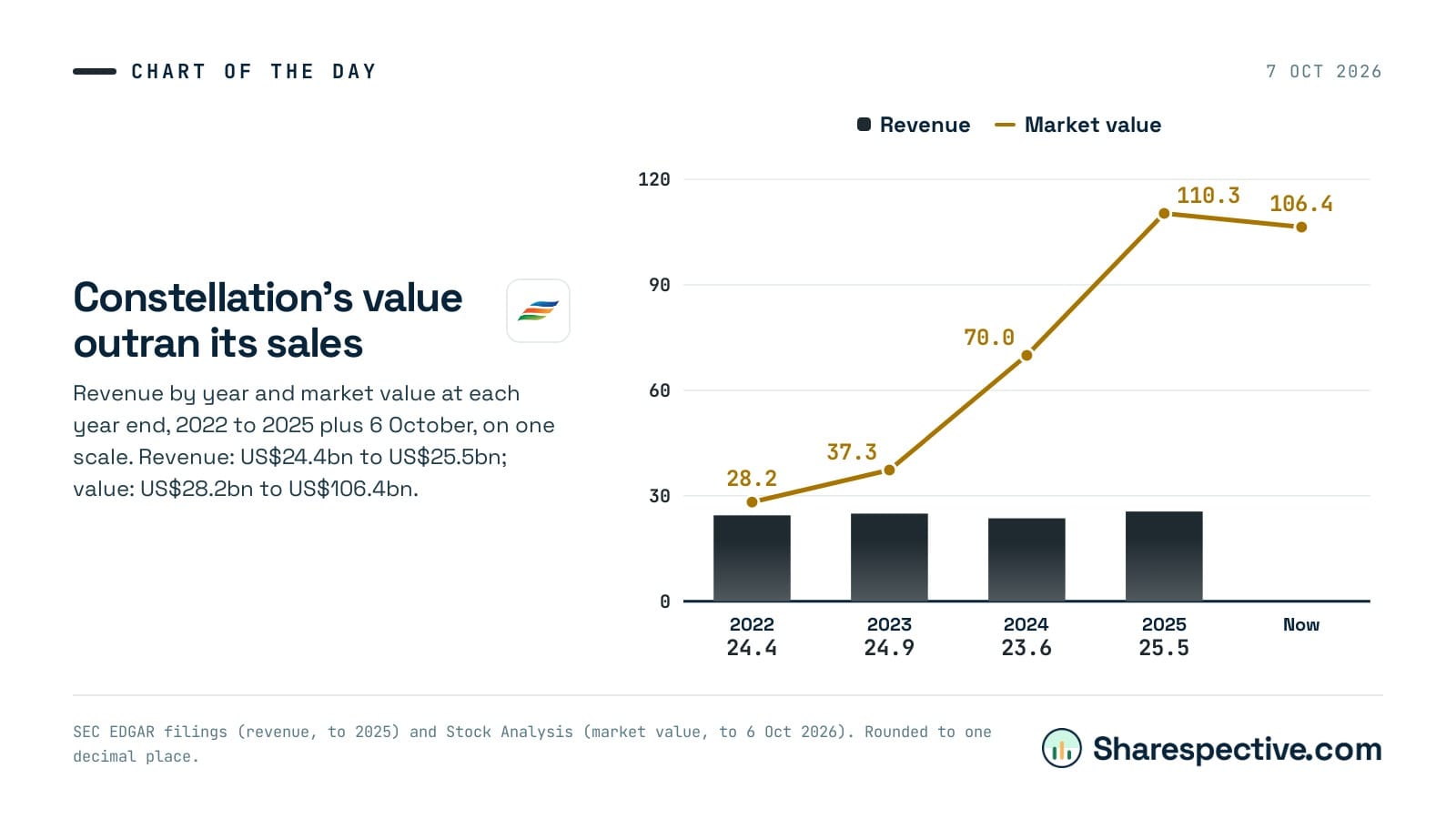
This is Constellation's second tech contract in a week. Amazon signed up last week for a 190-megawatt uprate at Calvert Cliffs in Maryland. Microsoft's 2024 deal restarts a reactor at Three Mile Island. Vistra and Talen Energy, which also own nuclear plants, rose on Tuesday too.
Constellation now has 20 years of revenue lined up for megawatts it still has to build. That is a strong position, and it rests on engineering. The first uprate is due in 2028, and that date is what Tuesday's 12% assumed.
More in
All stories →- Tuesday 10 November An $8 billion Iranian proposal reached the White House and took another 4% off oil
- Monday 9 November Energy stocks had their worst week since April 2025 as the war premium drained out of oil
- Tuesday 3 November Oil fell more than 7% because Iran and the United States started talking
General information and commentary only, not financial advice. It does not take account of your objectives, financial situation or needs, and reflects the author's own reading of public information at the time of writing, which may be wrong. Sharespective, its people and its clients may hold positions in the companies covered. Do your own research and talk to a licensed adviser.